How to Reduce Food Cravings and Improve Your Mood

How to Reduce Food Cravings and Improve Your Mood
Fire Up This Secret Weapon to Reduce Food Cravings and Improve Your Mood!

So, what is this secret weapon, you ask?

Paper. Say what?? Studies have shown that when you use a food journal, it keeps you accountable to yourself for meeting your health goals.

How often do you keep track of what you’re really eating and drinking?

If the answer is “hardly ever” or “never”, you might want to change that! Most people actually underestimate how much they’re actually eating and they think that they’re eating healthier than they really are. I catch myself all the time!

GET YOUR FREE DIET DIARY HERE

So, if you start writing down your food and drink consumption, you might be surprised at what you find and be able to spot patterns linked to your wellbeing. Knowing that you’re going to have to admit to yourself exactly what you ate can be a game changer when it comes to your eating habits! I know I think twice before eating something if I have to write it down!

How Food Journaling Helps Health and Wellbeing

Writing down everything you eat can help you to see why you eat in certain ways and it’s great for spotting signs of emotional eating, for example.

Keeping a food journal or diet diary helps you to see if you really are eating a truly balanced diet or not. You might think you’re getting a nice variety of fruit and vegetables into your daily diet, but a food journal will tell you whether this is definitely true. And if there is some room for improvement with your diet, you’ll soon work it out. Even a minor deficiency can become a lot more obvious when you can see at a glance what you’ve eaten that day.

GET YOUR FREE DIET DIARY HERE

You can also see if certain foods are giving you unpleasant side effects. For example, it may become obvious that you almost always get gas or bloating if you eat a particular food (like bread or dairy), but you don’t notice this with other foods. This might be a sign that your body can’t tolerate it very well, so you can decide whether to cut it out of your diet. Before you start keeping a food journal, you probably knew you were getting these symptoms but didn’t connect it specifically to anything you were eating.

How It Helps Weight Loss

According to experts, you’re more likely to be successful with weight loss if you keep track of what you’re eating in a food journal or tech apps like MyFitnessPal (my personal favourite!) which can track calories and nutrients.

Studies have suggested that keeping a food journal makes people more successful in losing weight and making sure it stays off. In one study, people who kept a food diary for 6 days per week lost twice as much weight as those who only did it for one day per week or didn’t log their food at all. Pretty impressive!

If you keep a food journal, you might notice that you’re snacking more than you’re aware of and if you also track what you’re doing at the time, you’ll probably find that a lot of it is mindless snacking and not linked to genuine hunger. For example, if you’re regularly eating while you’re watching television, it’s unlikely that you’re really appreciating what you’re eating. This can mean that you’ve eaten a lot more than you intended without even noticing.

It can also help you to spot patterns with when you eat. For example, maybe you don’t eat much during the day and then suddenly go a bit crazy in the evenings with the wrong kind of foods. Being aware of this can help you to space out your eating and keep your appetite under control.

How It Helps Mood

Keeping a “food and mood journal” goes a step further than the average food journal and also helps you to link together your food and mood.

If you can spot patterns between what you ate and how you were feeling at the time, it can make you a lot more aware of how your emotions are affecting your eating habits. Once you know this, you can take steps to start breaking the cycle.

It’s also important to log how you felt after eating. If you’re engaging in emotional eating, you may well find that you don’t feel any better afterwards and you may even feel guilty or ashamed that you indulged.

How to Keep a Food and Mood Journal

So, now you know how important a food journal can be but how do you go about keeping one? Ideally, you’ll want to fill it in every time you have something to eat or drink. You might think you’ll remember everything at the end of the day, but this is rarely the case!

Some of the questions you might want to ask yourself in your food journal include:

• What have I eaten or drunk and how much of this was consumed?
• What time was this?
• Where was I when I ate or drank this and what was I doing?
• Was I alone?
• How hungry was I?
• What emotions was I feeling? Did anything happen to make me feel this way?
• How did I feel afterwards?

You can use apps to help you track your food and these can be really useful when you’re out and about and need to log what you’ve eaten. Doing things the old fashioned way can make you more accountable to yourself though – there’s something about having to physically write it down that can make it seem more real.

Want a free Mood & Food Journal?
Subscribe to the newsletter and get access to your own copy.

Logging everything is only part of the story though. Don’t forget to set some time aside to review what you record and spot any patterns it might tell you. This will help you to make changes that improve your health and wellbeing.

Do you feel like you need some extra help and information on figuring out what to eat, easy way to prepare meals, setting realistic lifestyle goals and feeling good? Would a month’s worth of awesome tips, videos, recipes, and handouts make life a little easier and give you some direction? If so, the 28 Day Healthy Habits Kickstartwould be perfect for you! Set yourself up for success!

References:
American Journal of Preventative Medicine “Weight Loss During the Intensive Intervention Phase of the Weight-Loss Maintenance Trial” 2008, Vol 35, Issue 2, pages 118-126

In Health & Happiness
Dr. Tara Clapp, ND

Dr. Tara Clapp, ND

Dr. Tara Clapp, ND

Naturopathic Doctor Focusing on Anti-aging and Hormone Optimization

Dr. Tara Clapp, ND is a Board-certified Naturopathic Doctor and leading authority on Anti-Aging & Bio-Identical Hormones. Dr. Clapp, ND has taken numerous courses to advance her knowledge and has received certifications in Intravenous Nutrient Therapy, Mesotherapy & Injection Therapy for Anti-Aging  & Pain Management, as well as First Line Therapy Weight Management.

Dr. Tara Clapp, ND uses specialized, leading-edge laboratory testing for better diagnostics & health.  Dr. Tara Clapp, ND has special interests in anti-aging, bio-identical hormone therapy, food and nutrition,  metabolic and hormone imbalances and digestive disorders.

Being a naturopathic doctor has proven to be an especially rewarding experience to Dr. Tara Clapp, ND as it allows her to take part in people’s transformation and realization of their health potential. Consequently, Dr. Tara Clapp, ND continually updates her skills through new courses and conferences, and uses this information to better her clients.

Dr. Tara Clapp, ND is  a dedicated and caring physician, taking personal interest in her clients’ health and life.

Dr. Tara Clapp, ND has a passion for self-development programs that push her beyond regular physical and mental performance.  Dr. Tara Clapp, ND enjoys practicing yoga and meditation, has a love of photography, and relaxes by scrapbooking and enjoying long walks with her dog.

Categories

Dr. Tara Clapp, ND - Anti-aging and Hormone Optimization

Hi! I’m Dr. Tara Clapp, ND

I focus on anti-aging and hormone optimization.

As a naturopathic doctor, I help women achieve radiant skin, maintain an active lifestyle and have lots of energy to do what they want. But what I’m really passionate about is teaching women how to harness the power of nature to change their biology, hormones, and genetic expression so they can live happier and healthier lives and achieve their vision of their best self!

KickAss Keto Diet Program by Dr. Tara Clapp, ND
Renew You Detox Course by Dr. Tara Clapp, ND - Start Now! Detox from home in 10 days for only $47
28 Day Healthy Habits Online Course by Dr. Tara Clapp, ND
Crucial Information Food Cravings Are Telling You

Crucial Information Food Cravings Are Telling You

Crucial Information Food Cravings Are Telling You

Have you ever had such strong cravings for something that you were powerless to resist? And once you started eating, you couldn’t just stop at one serving? Or even two?

Well, according to scientific research, it could be your body’s way of telling you that you may have nutritional deficiencies or other health issues.

Genuine hunger is triggered by the stomach and if you’re hungry enough, it’s likely you’d eat pretty much anything. Cravings though, tend to be a lot more specific and focused on a certain type of food, which gives a lot away in terms of what your body truly needs or might be lacking. You may not realize it, but certain cravings can tell you exactly what your body is crying out for.

Here are some common food cravings and what they suggest your body isn’t getting enough of so that next time you reach for that chocolate bar or salty food, you are well informed to make the right food choice for your body!

Chocolate Cravings

Chocolate Bars

Have a craving for chocolate? It might be more than just a sweet tooth, especially if you’re not really craving other sweet foods in the same way. A strong craving for chocolate can be a sign that you’re not getting enough magnesium in your diet.

In particular, dark chocolate is a good source of magnesium. By choosing 70-85% cocoa, you could get as much as 25% of your daily needs of this mineral with just one square! Personally, I like to eat 2.

The problem with chocolate is that most people gravitate towards the milk chocolate kind that is full of sugar and offers little to no nutritional value. You can’t compare a KitKat or Mars Bar to an organic fair-trade 85% cocoa chocolate bar!

What to eat instead: Boost your magnesium intake with leafy greens, avocado and pumpkin seeds. If you really can’t stay away from chocolate, make sure you go for dark chocolate that is rich in cacao (at a minimum 70%) and just stick to one or two squares. As a general rule of thumb: the darker the chocolate, the more magnesium it’s likely to have.

Sweet Food Cravings

stack of colourful macarons

Craving sweet foods high in sugar suggests you’re not getting enough chromium in your diet. Your body doesn’t need a huge amount of this mineral, but it is vitally important for helping insulin to do its job and stabilize blood sugar levels.

Some studies have looked at whether chromium picolinate supplements could be used to reduce cravings in general and there is some evidence it could do this, especially for women who are currently overweight.

What to eat instead: Stock up on broccoli, onions, green beans, mushrooms, tomato and romaine lettuce for a chromium boost. Cinnamon is also another option – it tastes sweet, fills you up, and balances blood sugar!

Salty Food Cravings

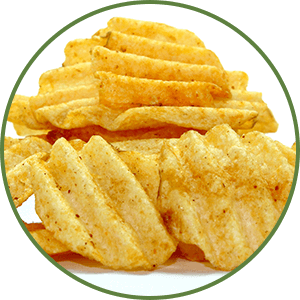
chips

Are you having a hard time keeping your hand out of the potato chip bag? Do you have to put salt on everything you eat? Constantly craving salty foods could be a sign that your adrenal glands are under stress. If this happens, it can mean that they aren’t producing the right balance of hormones. This can encourage your kidneys to get rid of more salt and your body then craves it to get your salt levels back up again.

Figuring out what is stressing you out is step one. Since our adrenal glands help us cope with stress, being constantly busy and worn out is draining to the adrenal glands. Trying to include meditation, some quiet in your day, and stress management techniques are extremely important.

Mineral deficiencies can also be a factor. Your body needs minerals such as potassium for lots of different roles in the body but if you’re lacking in it, it may lead to a yearning for salt.

The third thing that can cause salt cravings can be dehydration. Your body needs a certain amount of fluid to function properly and if you’re beneath that, craving salt could be a subtle way of telling you this.

What to eat instead: If low potassium is the culprit, you can eat more bananas, avocado, tomatoes, potatoes and cantaloupe melon to counteract it. Or drink a glass of water if you suspect you might be dehydrated. If you’re not sure about your adrenal glands, speak to your doctor about getting them tested. Good quality sleep is important for your adrenals.

Meat Cravings

raw cut of steak with rosemary on top

Meat cravings can happen often. Even vegetarians and vegans can get a real craving for meat as it can be a sign of iron deficiency. I was a vegetarian for 6 years, and what finally broke me was a piece of juicy steak!

Iron in animals is in what is called “heme-form”. We can absorb it readily and incorporate it into our haemoglobin in our red blood cells. Plant-based iron sources are “non-heme” and aren’t always used as efficiently as animal sources. Our body has to convert them from non-heme form to heme-form so that we can absorb them.

Craving meat can also be a sign that you are not eating enough protein, especially if you are exercising regularly. On average, a person need 0.8g of protein per kg of body weight. So for example, if you weigh 150 pounds (68 kg), then you need to eat 55 g of protein. What does that look like in food? A chicken breast (23 g), handful of almonds (6g), 4 oz of steak (28g). Easy, right?

What to eat instead: Red meat is a great source of iron, particularly beef. If you don’t eat meat, make sure your diet includes plenty of legumes, beans, prunes, figs and dried fruits. Don’t go too overboard with dried fruits though as they can contain a lot of natural hidden sugar. You can help iron absorption more easily by consuming it alongside vitamin C rich foods such as oranges.

Cheese Cravings

slices of cheese

Can’t stop eating cheese? Cheese is high in fat, and craving cheese could indicate that you are lacking in essential fatty acids. It may also indicate a calcium or vitamin D deficiency.

People always think of cheese as fat and protein. But do you want to know something surprising? Cheese cravings can also indicate sugar cravings because milk contains natural sugars in the form of lactose.

What to eat instead: Walnuts, chia seeds, flax seeds and wild salmon are all great sources of fatty acids. Experts recommend that you eat fatty fish a couple of times per week if you are a fish eater. If calcium is the problem, greens such as broccoli and kale can boost your levels. And of course, there’s always cheese itself if you eat dairy!

Ice Cravings

ice cubes

Craving ice is a part of a wider range of cravings for things that don’t offer any nutritional value and is known as pica. Some experts have linked pica to an iron deficiency, although they’re not entirely sure what the connection is.

What to eat instead: Stock up on iron rich foods such as meat, legumes, beans and dried fruits.

Do you find yourself craving any of these foods often? Perhaps it’s time to boost your nutrition and replenish those essential vitamin and mineral levels. Learn how in 28 Day Healthy Habits Kickstart.

References:
“Magnesium Can Help Prevent Chocolate Cravings” Natural News.com Aug 2005
“Effects of Chromium Picolinate on Food Intake and Satiety” Diabetes Technology and Therapeutics: 2008 Oct;10(5):405-12.
“Adrenal Glands: Fatigue and Salt Cravings” LiveStrong.com Aug 2017
“Potassium Depletion and Salt Cravings” LiveStrong.com Oct 2017

In Health & Happiness
Dr. Tara Clapp, ND

Dr. Tara Clapp, ND

Dr. Tara Clapp, ND

Naturopathic Doctor Focusing on Anti-aging and Hormone Optimization

Dr. Tara Clapp, ND is a Board-certified Naturopathic Doctor and leading authority on Anti-Aging & Bio-Identical Hormones. Dr. Clapp, ND has taken numerous courses to advance her knowledge and has received certifications in Intravenous Nutrient Therapy, Mesotherapy & Injection Therapy for Anti-Aging  & Pain Management, as well as First Line Therapy Weight Management.

Dr. Tara Clapp, ND uses specialized, leading-edge laboratory testing for better diagnostics & health.  Dr. Tara Clapp, ND has special interests in anti-aging, bio-identical hormone therapy, food and nutrition,  metabolic and hormone imbalances and digestive disorders.

Being a naturopathic doctor has proven to be an especially rewarding experience to Dr. Tara Clapp, ND as it allows her to take part in people’s transformation and realization of their health potential. Consequently, Dr. Tara Clapp, ND continually updates her skills through new courses and conferences, and uses this information to better her clients.

Dr. Tara Clapp, ND is  a dedicated and caring physician, taking personal interest in her clients’ health and life.

Dr. Tara Clapp, ND has a passion for self-development programs that push her beyond regular physical and mental performance.  Dr. Tara Clapp, ND enjoys practicing yoga and meditation, has a love of photography, and relaxes by scrapbooking and enjoying long walks with her dog.

Categories

Dr. Tara Clapp, ND - Anti-aging and Hormone Optimization

Hi! I’m Dr. Tara Clapp, ND

I focus on anti-aging and hormone optimization.

As a naturopathic doctor, I help women achieve radiant skin, maintain an active lifestyle and have lots of energy to do what they want. But what I’m really passionate about is teaching women how to harness the power of nature to change their biology, hormones, and genetic expression so they can live happier and healthier lives and achieve their vision of their best self!

KickAss Keto Diet Program by Dr. Tara Clapp, ND
Renew You Detox Course by Dr. Tara Clapp, ND - Start Now! Detox from home in 10 days for only $47
28 Day Healthy Habits Online Course by Dr. Tara Clapp, ND

Pin It on Pinterest

On this website we use first or third-party tools that store small files (cookie) on your device. Cookies are normally used to allow the site to run properly (technical cookies), to generate navigation usage reports (statistics cookies) and to suitably advertise our services/products (profiling cookies). We can directly use technical cookies, but you have the right to choose whether or not to enable statistical and profiling cookies. Enabling these cookies, you help us to offer you a better experience. View the Policy